Wisdom Teeth: The Complete 2026 Recovery Guide
Navigating wisdom teeth removal can be daunting. We've aggregated our top expert advice on procedures, pain management, and nutrition to ensure your recovery is as smooth as possible.
Advertise Here
Reach thousands of patients looking for dental services.
Contact UsCan Wisdom Teeth Cause a Sore Throat? Exploring the Connection and Treatment Options
Yes, wisdom teeth can cause a sore throat – particularly when they become impacted or infected. Wisdom teeth, also known as third molars, are located at the very back of your mouth near your throat. When these teeth don't have enough space to emerge properly or become infected, they can create inflammation and pressure that extends to your throat area, causing pain and discomfort.
Understanding the Connection Between Wisdom Teeth and Sore Throats
Wisdom teeth typically erupt between ages 17 and 25, but many people experience complications because there isn't enough room for them to grow properly. When wisdom teeth become problematic, they can affect your throat through several mechanisms:
How Impacted Wisdom Teeth Lead to Sore Throat
Impacted wisdom teeth occur when the teeth cannot fully emerge from the gums or jawbone. This creates several problems that can result in throat pain:
- Pressure on surrounding tissues: Impacted teeth push against nearby structures, including throat muscles
- Bacterial infections: Food particles and bacteria accumulate around partially emerged teeth, leading to infections that can spread to throat tissues
- Inflammation response: Your body's immune system triggers widespread inflammation that affects both the tooth area and throat
- Referred pain: Nerve pathways can cause pain from wisdom teeth to be felt in the throat area
Symptoms of Impacted Wisdom Teeth That Affect Your Throat
Watch for these specific warning signs that suggest your sore throat may be wisdom tooth-related:
Primary Symptoms
- Sore throat that persists or worsens, especially on one side
- Pain when swallowing food or liquids
- Jaw pain that radiates toward your throat and ear
- Swollen lymph nodes in your neck
- Bad breath or metallic taste in your mouth
Secondary Symptoms
- Headaches that seem to originate from your jaw area
- Ear pain on the same side as the problematic wisdom tooth
- Difficulty opening your mouth fully (trismus)
- Red, swollen, or tender gums around the wisdom tooth area
- Facial swelling on the affected side
Serious Warning Signs - Seek Immediate Care
- High fever (over 101°F/38.3°C)
- Severe difficulty swallowing or breathing
- Facial swelling that affects your ability to open your mouth or swallow
- Pus drainage from the gum area
- Severe, uncontrolled pain that doesn't respond to over-the-counter medications
Immediate Relief for Wisdom Tooth-Related Sore Throat
While professional treatment is necessary for underlying wisdom tooth problems, these home remedies can provide temporary relief:
Pain Management
- Over-the-counter pain relievers: Ibuprofen (600-800mg) or acetaminophen as directed
- Cold compress: Apply to the outside of your cheek for 15-20 minutes to reduce swelling
- Warm salt water rinse: Mix 1/2 teaspoon salt in warm water, rinse gently 3-4
times daily
Throat Comfort
- Warm salt water gargles: Can soothe throat irritation and reduce bacteria
- Throat lozenges: Choose ones with numbing agents for temporary relief
- Honey and warm water: Natural anti-inflammatory properties can help soothe throat pain
- Stay hydrated: Drink plenty of fluids to keep throat tissues moist
Infection Control
- Antiseptic mouthwash: Use an alcohol-free formula to reduce bacteria
- Hydrogen peroxide rinse: Mix equal parts 3% hydrogen peroxide and water (don't swallow)
- Avoid irritants: Stay away from spicy foods, alcohol, and tobacco
Diagnosing Impacted Wisdom Teeth
If you suspect that your sore throat is connected to your wisdom teeth, it's important to consult a dentist or oral surgeon for proper diagnosis. Here's what to expect:
Professional Examination
- Visual inspection of your mouth and throat area
- Digital X-rays to determine wisdom tooth position and development
- Assessment of symptoms and medical history review
- Evaluation of bite and jaw function
- Infection screening if signs of bacterial involvement are present
Diagnostic Imaging
Modern dental imaging can reveal:
- Exact position and angle of wisdom teeth
- Proximity to nerves and sinuses
- Extent of any bone or tissue damage
- Presence of cysts or other complications
Treatment Options for Impacted Wisdom Teeth
Once diagnosed with impacted wisdom teeth causing throat problems, several treatment approaches may be recommended:
Conservative Treatment
For mild cases or when extraction isn't immediately possible:
- Prescription antibiotics to clear bacterial infections (typically 7-10 days)
- Professional cleaning around the wisdom tooth area
- Medicated mouth rinses to reduce inflammation
- Pain management with stronger prescription medications if needed
Expected timeline: Symptoms typically improve within 3-5 days of starting antibiotics, with complete resolution in 7-10 days.
Surgical Treatment
Wisdom tooth extraction may be recommended when:
- Impaction is severe or recurring
- Conservative treatment has failed
- There's risk of damage to adjacent teeth
- Cysts or tumors have developed
Recovery timeline:
- Initial healing: 3-7 days
- Complete soft tissue healing: 2-3 weeks
- Full bone healing: 3-6 months
Advanced Cases
For severe infections or complications:
- Drainage procedures for abscesses
- Hospitalization for serious systemic infections
- IV antibiotics for severe cases
Prevention: Avoiding Wisdom Tooth Complications
Taking proactive steps can help prevent wisdom tooth problems that lead to sore throats:
Daily Oral Hygiene
- Thorough brushing: Pay special attention to back teeth, use a soft-bristled toothbrush
- Antimicrobial mouthwash: Use daily to reduce bacterial buildup
- Proper flossing: Use floss or water flossers to clean around wisdom teeth
- Tongue cleaning: Remove bacteria from your tongue surface daily
Professional Care
- Regular dental checkups: Every 6 months to monitor wisdom tooth development
- Professional cleanings: Remove plaque and tartar buildup around hard-to-reach areas
- Early intervention: Address problems before they become severe
- Orthodontic evaluation: Determine if there's adequate space for wisdom teeth
Lifestyle Factors
- Avoid hard foods: That can damage or irritate emerging wisdom teeth
- Don't use
teeth as tools: Prevent unnecessary trauma to the tooth area
- Manage stress: High stress can weaken immune system and increase infection risk
- Maintain good nutrition: Support immune system and oral health
Frequently Asked Questions
Can upper wisdom teeth cause sore throat?
Yes, upper wisdom teeth can definitely cause sore throat symptoms. Upper wisdom teeth are actually closer to your sinuses and throat structures, which can make throat pain more noticeable when these teeth are impacted or infected.
How long does wisdom tooth sore throat last?
With proper treatment (antibiotics for infection), wisdom tooth-related sore throat typically improves within 3-5 days and resolves completely within 7-10 days. However, if the underlying wisdom tooth problem isn't addressed, symptoms will likely return.
Can I treat wisdom tooth sore throat at home?
While home remedies can provide temporary relief, wisdom tooth problems usually require professional dental treatment. See a dentist if symptoms persist beyond 2-3 days or if you develop signs of serious infection (fever, severe swelling, difficulty swallowing).
Should all wisdom teeth be removed?
Not necessarily. Wisdom teeth that emerge properly, can be cleaned effectively, and don't cause problems can often be kept. However, wisdom teeth that repeatedly cause infections, pain, or crowding issues are typically recommended for removal.
What's the difference between wisdom tooth pain and regular sore throat?
Wisdom tooth-related sore throat is often accompanied by jaw pain, bad breath, swollen lymph nodes, and pain that's worse on one side. Regular viral sore throats typically affect both sides equally and are accompanied by other cold/flu symptoms.
Is wisdom tooth extraction painful?
Modern extraction procedures are performed under local anesthesia, so you shouldn't feel pain during the procedure. Post-operative discomfort is normal and manageable with prescribed pain medications. Most people return to normal activities within 3-7 days.
When to See a Dentist or Oral Surgeon
You should seek professional dental care if you experience any of the following:
Routine Care Needed
- Persistent sore throat lasting more than 3-4 days
- Mild to moderate jaw pain around wisdom teeth
- Bad breath that doesn't improve with good oral hygiene
- Difficulty cleaning around wisdom teeth effectively
Urgent Care Required
- Severe, worsening pain that interferes with daily activities
- Signs of infection: Fever, facial swelling, pus drainage
- Difficulty swallowing or opening your mouth
- Swollen lymph nodes that are tender to touch
Emergency Care Needed
- High fever (over 101°F/38.3°C) with dental pain
- Severe facial swelling affecting breathing or swallowing
- Unable to swallow liquids or your own saliva
- Signs of spreading infection: Red streaks on face or neck, severe malaise
The Bottom Line
Wisdom teeth can indeed cause sore throat symptoms, especially when they become impacted or infected. The close proximity of wisdom teeth to throat structures means that dental problems in this area often manifest as throat-related discomfort.
Key takeaways:
- Impacted or infected wisdom teeth commonly cause referred throat pain
- Early professional intervention prevents serious
complications
- Home remedies provide temporary relief but don't address underlying problems
- Regular dental checkups help identify wisdom tooth issues before they cause severe symptoms
- Don't ignore persistent sore throat combined with jaw pain or other wisdom tooth symptoms
If you're experiencing a sore throat along with jaw pain, bad breath, or swollen lymph nodes, consult with a dental professional promptly. Addressing wisdom tooth problems early can prevent more serious complications and provide lasting relief from throat-related discomfort.
Understanding the connection between wisdom teeth and sore throats, recognizing common symptoms, and taking preventive measures can help you maintain optimal oral health and avoid unnecessary discomfort.
Related Content:
- Signs You Need Wisdom Tooth Removal
- Post-Extraction Care Instructions
- Managing Dental Pain at Home
- Causes of Sore Throats - Medical News Today
- Impacted Wisdom Teeth - Mayo Clinic
- Wisdom Teeth Extraction - WebMD
This article is for informational purposes only and does not replace professional dental advice. Always consult with a qualified dentist or oral surgeon for proper diagnosis and treatment of wisdom tooth problems. If you experience severe symptoms or signs of serious infection, seek immediate medical attention.
The Complete Guide to Wisdom Teeth Removal: Procedure, Recovery, and Expert Tips
Wisdom teeth, or third molars, are the final set of teeth to emerge, usually appearing between the ages of 17 and 25. While some people never experience issues, many face complications like impaction, crowding, or infection.
Whether you are preparing for the surgery or are currently in the healing phase, this guide provides a professional roadmap for a smooth procedure and a complication-free recovery.
1. Understanding the Procedure: Why Removal is Necessary
Wisdom teeth often lack the space to erupt properly. When a tooth is "impacted," it remains trapped under the gum line or bone, which can lead to:
- Pericoronitis: Infection of the gum tissue surrounding the tooth.
- Cyst Formation: Fluid-filled sacs that can damage the jawbone and roots.
- Crowding: Shifting of your straight, healthy teeth.
- Decay: Due to their position, wisdom teeth are notoriously difficult to clean, making them magnets for bacteria.
What Happens During Surgery?
Depending on the complexity and position of the teeth, your dentist or oral surgeon will use one of three sedation types:
- Local Anesthesia: To numb the immediate area.
- Sedation Anesthesia: To suppress your consciousness (you'll feel "dozy").
- General Anesthesia: For complex impactions where you will be fully unconscious.
2. The 24-Hour Critical Zone: Protecting the Clot
The most important goal on Day 1 is to protect the blood clot forming in the socket. If this clot is dislodged, you may develop dry socket (alveolar osteitis)—a painful condition where bone and nerves are exposed to air and food.
- Biting Pressure: Keep the gauze pad in place for 30–60 minutes post-surgery. If bleeding persists, replace it with a moistened
black tea bag; the tannic acid promotes faster clotting.
- The "No" List: For 24 hours, DO NOT use a straw, spit forcefully, smoke, or drink carbonated beverages. The suction can physically pull the clot out of the socket.
- Rest: Keep your head elevated with 2-3 pillows to reduce jaw-level blood pressure and throbbing.
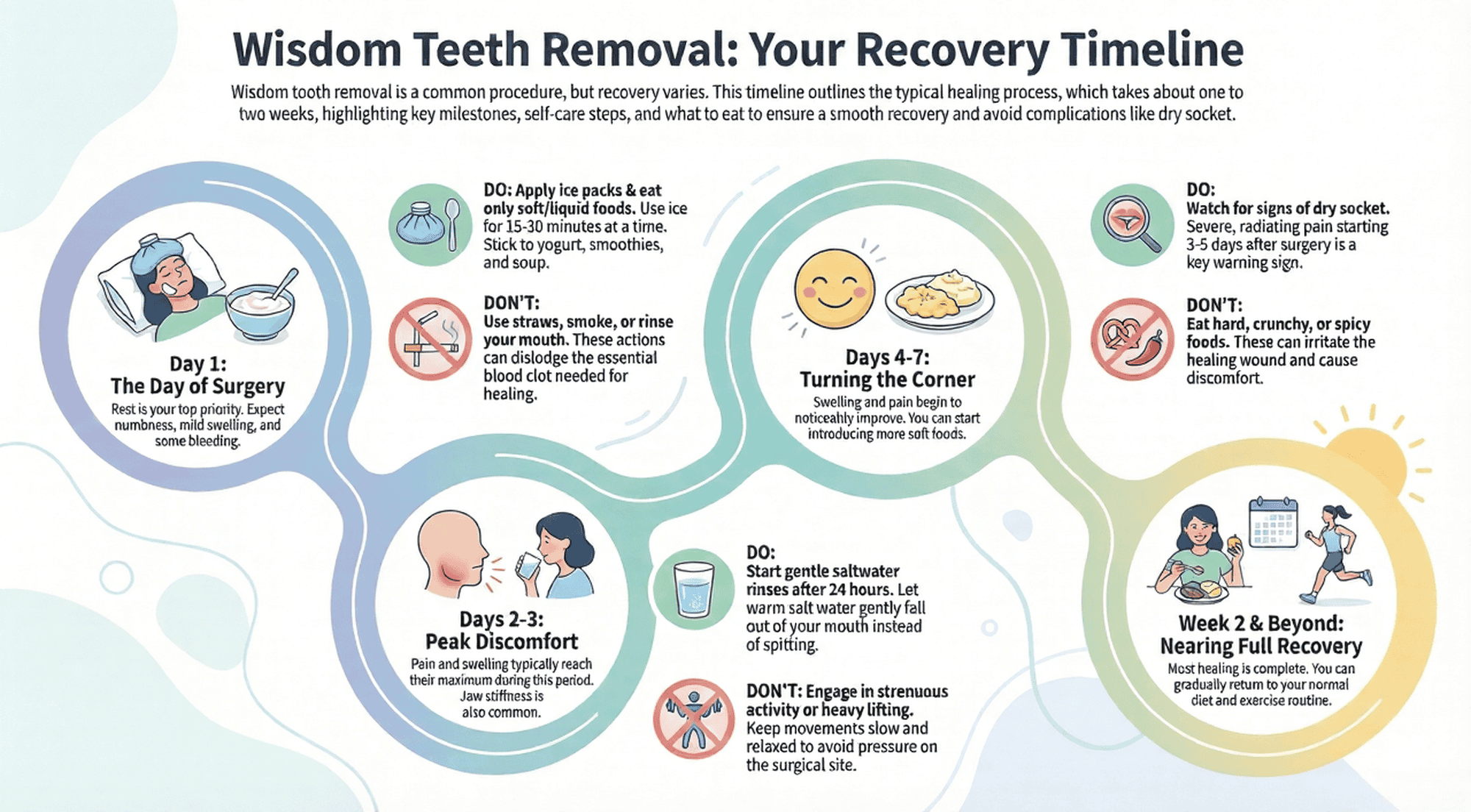
3. Your Recovery Timeline
Days 2–3: Managing the Peak of Swelling
Swelling usually peaks 48 to 72 hours after surgery.
- Cold vs. Heat: Apply ice packs (20 mins on/off) for the first 36 hours. After that, switch to warm, moist compresses to relax the jaw muscles and improve circulation.
- Salt Water Rinses: Start these 24 hours after surgery. Mix 1/2 tsp salt in 8oz warm water. Do not "swish"—lean your head side-to-side and let the water flow out over the sink.
Days 4–7: Regaining Mobility
- Jaw Stiffness: You may experience trismus (stiffness). Gently begin stretching your jaw as comfort allows.
- Monitor for Spikes: Pain should steadily decrease. If pain suddenly worsens on Day 4 or 5, it is a hallmark sign of a dry socket or infection.
Week 2 and Beyond: Long-term Healing
While the surface gums close in about two weeks, the jawbone takes 3–6 months to fully regenerate. Continue to keep the area clean of debris to prevent "smoldering" infections.
4. The Wisdom Tooth Diet: What to Eat
Nutrition is fuel for healing. Focus on high-protein, soft options.
| Phase | Recommended Foods | Foods to Avoid | | --- | --- | --- | | Days 1-2 | Greek yogurt, lukewarm broths, protein shakes (no straw!), applesauce. | Anything hot, spicy, or crunchy. | | Days 3-5 | Mashed potatoes, scrambled eggs, well-cooked pasta, hummus. | Rice, quinoa, or small seeds (they get stuck in the holes). | | Day 7+ | Soft chicken, steamed vegetables, pancakes. | Chips, nuts, and popcorn. |
5. Professional Pain Management Tips
- The "Pre-emptive" Strike: Don't wait for the numbness to wear off. Take your first dose of prescribed pain medication or NSAIDs (like Ibuprofen) immediately after arriving home.
- Hydration: Dehydration increases pain sensitivity. Aim for 8-10 glasses of water daily.
- Oral Hygiene: Gently brush your other teeth, but stay clear of the surgical sites for the first 48 hours.
When to Call Your Oral Surgeon
Contact your clinic if you experience:
- Fever or chills.
- Difficulty breathing or swallowing.
- Pus or excessive discharge from the socket.
- Numbness that lasts more than 24 hours (Paresthesia).
- Before your surgery, read our guide on Why Smoking Before Dental Surgery is Risky.
- Struggling with what to drink? Check out our Sip-Safe Guide for Tooth Extractions.
- Dealing with throat pain? Find out if Wisdom Teeth Can Cause a Sore Throat.
Ready to find a
specialist? Use the DentaDir Directory to find a top-rated oral surgeon near you.
Advertise Here
Reach thousands of patients looking for dental services.
Contact Us** Related Pillar:** The Ultimate Guide to Dental Implants (2026 Edition) ---